
Beijing, November 13, 2025 — Driven by the waves of 5G, artificial intelligence, and the Internet of Everything, tablet computers are undergoing a profound "role transformation." Evolving from the once-perceived "large smartphones," tablets are now emerging as intelligent productivity hubs, deeply integrating into core sectors such as education, business, healthcare, and creative industries. In 2025, the global tablet market is experiencing structural transformation, with technology convergence and ecosystem building taking center stage, officially ushering in a new era of the "smart ecosystem."
Market Expansion and Diversified Applications
According to the latest report by China Research and Intelligence (CRI), Analysis and Investment Outlook of China’s Tablet Market (2025–2030), global tablet shipments are projected to exceed 150 million units in 2025, representing a 12% year-on-year increase. China's market is growing at an especially remarkable pace, with an expected annual compound growth rate of 4%–5%, significantly outpacing the global average.
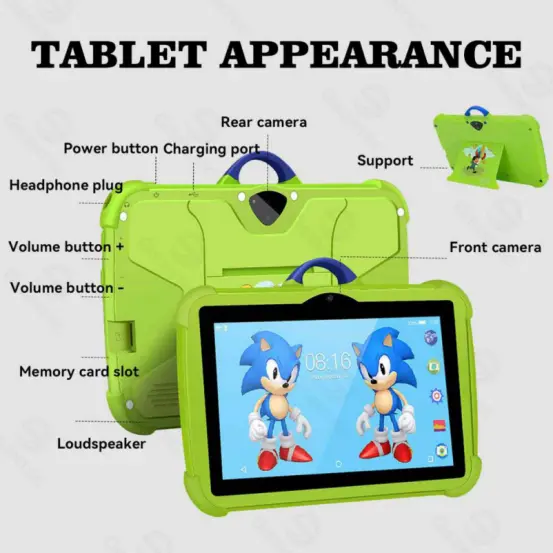
This growth is fueled by the continuous expansion of application scenarios. In education, solutions such as "digital schoolbags" and "smart classrooms" have driven tablet penetration rates above 30%. In the enterprise sector, remote work and digital transformation are creating strong demand for cross-device collaboration and professional software compatibility. In healthcare, tablets serve as mobile diagnostic terminals, enabling real-time electronic medical record updates and AI-assisted diagnosis, significantly improving medical service efficiency in grassroots facilities.
Accelerated Technology Convergence and Product Upgrades
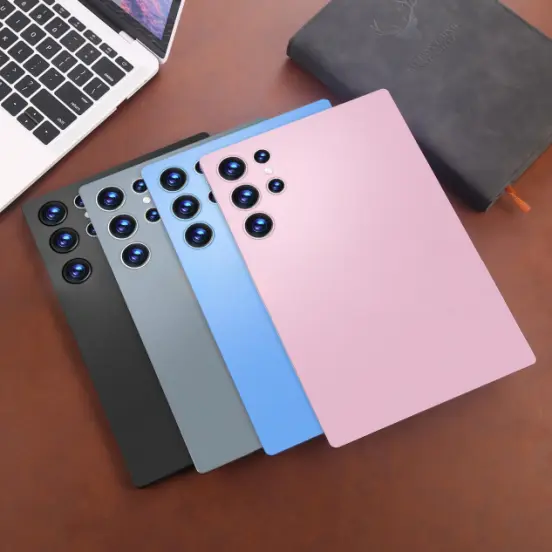
In 2025, tablet technology is advancing on multiple fronts. The widespread adoption of 5G has freed tablets from Wi-Fi dependency, enhancing their value in outdoor operations and mobile inspections. Artificial intelligence is now deeply embedded—from voice assistants to AI-powered learning analytics and multi-party speech-to-text conversion—redefining human-machine interaction.
Display technology is also advancing. OLED and Mini LED are now standard in mid-to-high-end models, delivering superior contrast and color accuracy. Flexible displays are paving the way for innovative form factors such as foldable and rollable devices. Huawei’s MatePad Air series, powered by its PC Application Engine, now supports smooth operation of desktop-grade productivity software, blurring the line between tablets and traditional PCs.
Meanwhile, advancements in wireless charging, edge computing, and AR/VR integration are further expanding the tablet’s utility, transforming it from a content consumption device into a powerful content creation platform.
Market Competition Reshaped: From Price Wars to Value Wars
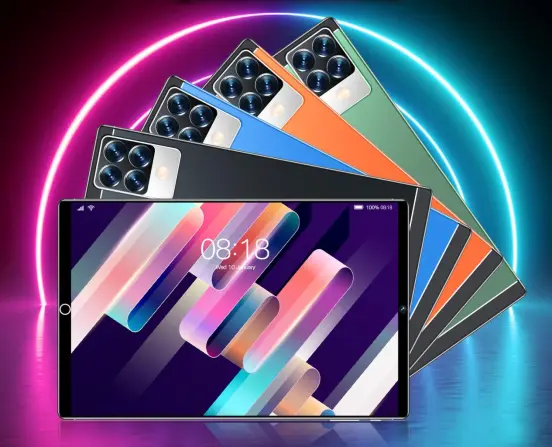
The global tablet market has evolved into a "dual-core, multi-polar" landscape. Apple maintains its leadership in professional creation with M-series chips and the iPadOS ecosystem. Samsung explores form-factor innovation through foldable screens. Chinese brands, leveraging supply chain advantages and localized services, are rapidly rising.
Huawei stands out as the most prominent player in 2025. Through the cross-device collaboration capabilities of its HarmonyOS ecosystem, it has established a strong presence in government and enterprise markets. The MatePad Air 2025 series, strategically positioned in the 2,000–3,500 RMB segment, combines AI features with education solutions, achieving shipment growth far exceeding the industry average. Xiaomi is building an AIoT-powered device ecosystem, while Lenovo focuses on commercial channels and industry-specific customization. Chinese brands are reshaping industry rules through an "ecosystem + scenario" strategy.
Future Outlook: Vertical Markets as Growth Engines, Ecosystem and Technology as Key Differentiators
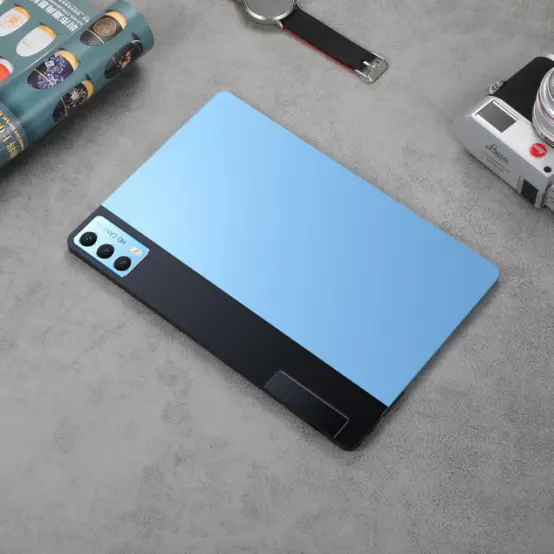
Industry analysts predict that vertical-sector solutions will become the core growth driver over the next three years. Education and industrial applications are widely seen as the most promising segments. Companies capable of building seamless "hardware + system + service" ecosystems will hold a significant long-term competitive edge.
Technologically, breakthroughs in Micro-LED, flexible displays, natural language processing, and gesture control are expected to continue, potentially giving rise to the next generation of human-computer interaction. Meanwhile, upstream display technologies and downstream smart education platforms are becoming key focal points for investors.
"Tablets are no longer just mobile devices—they are critical gateways to intelligent ecosystems," said an industry expert. "The company that builds a closed-loop ecosystem first will lead the next phase of competition."

Conclusion
From entertainment tools to productivity revolutionaries, from spec racing to ecosystem building, the evolution of tablets reflects the deep integration of mobile technology into human society. In 2025, this transformation is accelerating. The future is here—change is the only constant.
Post time: Nov-17-2025