
Recently, the global tablet market has been swept up in a new wave of price adjustments, with mainstream brands including Xiaomi, Honor, Lenovo, and Dell successively announcing price increases for their tablet products, drawing attention from consumers and the industry. According to multiple reports, behind this round of price hikes lies a complex interplay of factors, includingsoaring storage chip costs, supply chain pressures from the AI industry boom, and brands' premiumization strategies, which are collectively reshaping the pricing landscape of the tablet market.

Significant Price Increases, Multiple Brands Adjust Product Line Pricing
Since the beginning of 2026, Xiaomi's tablet lineup has led the price adjustment, with some models seeing increases of 15%-20%. The starting price of the Redmi Pad series, for instance, has risen from 999 yuan to 1,199 yuan, while the high-end Xiaomi Tablet 7 Ultra has surpassed the 6,000 yuan mark. Meanwhile, brands such as Honor, Lenovo, and Dell have also followed suit, with price hikes of 200-800 yuan across various models. Industry insiders point out that the price increases are spreading from the entry-level market to the mid-to-high-end segment, signaling a challenge to the era of "high cost-performance" tablets that consumers have grown accustomed to.
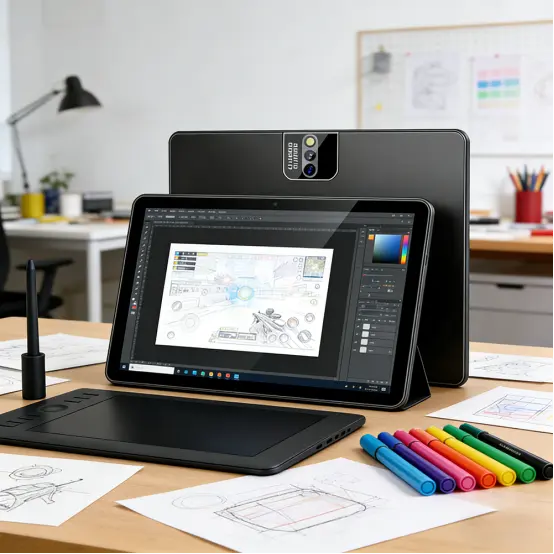
Core Cause Analysis: Memory Chip Crisis and AI Industry Supply Chain Impact
Out-of-Control Memory Chip Prices, Cost Pressures Transferred to End Products
A report by industry analytics firm TrendForce indicates that the surging demand for AI servers has seized a significant portion of DRAM and NAND flash memory capacity, leading to a severe supply-demand imbalance for consumer-grade memory chips. Lei Jun, President of Xiaomi Group, frankly admitted, "The rise in storage costs has far exceeded expectations, and the profit margins of mid-to-low-end models can no longer cover the costs." Data shows that memory costs account for 10%-15% of the total material cost of a tablet, making it the core driver of the price increases.

AI Industry Boom Squeezes Consumer Electronics Supply Chain
The insatiable demand for high-performance memory from AI large model training and server deployment has led to a concentration of semiconductor industry resources in the AI sector. Analyst Yidi Yiyao pointed out, "The global semiconductor production capacity is undergoing a structural adjustment, with traditional consumer electronics forced to cede part of the capacity, thereby triggering shortages and price hikes." This trend is expected to persist until the end of 2026, with mid-range tablets potentially facing the dilemma of "reduced configuration to maintain price" (e.g., the removal of 1TB storage options, reduced RAM configurations).
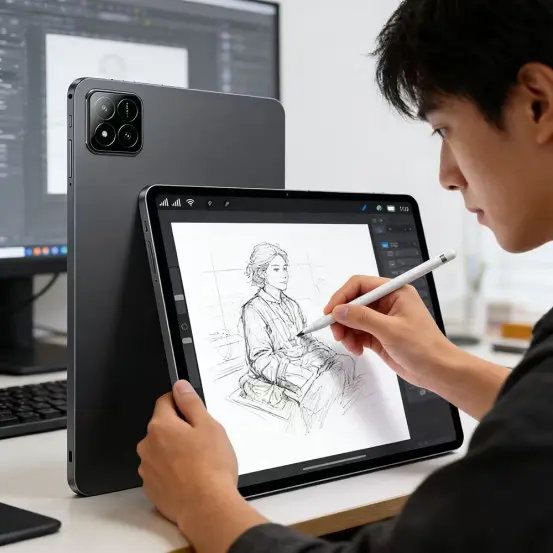
Brand Premiumization Strategy and Ecosystem Layout Drive Up Costs
Brands like Xiaomi are accelerating the premiumization of their tablet products. The integration of self-developed chips (e.g., the Xuanjie O1), 120W fast charging, and ecosystem connectivity features (e.g., PC-level application compatibility, cross-device collaboration) has enhanced product competitiveness but also driven up R&D and manufacturing costs. Analyst Yidu Yitian believes that "the technology arms race, aimed at competing with products like the iPad, is forcing Android tablet manufacturers to support their innovation investments through price premiums."
Industry Responses and Consumer Advice
Facing the pressure of rising prices, manufacturers are adopting diversified strategies: Honor is optimizing supply chain management to reduce costs, while Xiaomi is strengthening ecosystem integration to enhance product value. Meanwhile, several industry executives have advised consumers to "rationally plan purchase timing"—those with an urgent need to upgrade may consider purchasing sooner to avoid the risk of higher future prices or potential configuration downgrades.

Future Outlook: Technological Innovation as the Key to Resolution
Although the current price hike wave brings short-term pain, the industry generally believes that technological breakthroughs and production capacity rebalancing will alleviate the crisis. As domestic memory chip technology matures, the supply chains for AI and consumer electronics gradually separate, and new energy-efficient manufacturing processes are applied, the tablet market is expected to return to a path of rational growth by 2027. At that time, products that combine high performance with reasonable prices are likely to once again become the mainstream of the market.
Post time: Mar-04-2026