
1.Overall Market Outlook: Moderate Recovery and Structural Adjustment
- Growth Trend: The global tablet market is expected to maintain moderate growth in 2026, although the growth rate may slow down. IDC forecasts that China’s tablet market will see approximately 2.4% year-on-year growth in shipment volume in 2026. After the rebound in 2025, the global market will enter a relatively stable phase of "weak recovery."
- Price Volatility Risks: As we enter 2026, upward pressure on prices of core components such as memory (DRAM/NAND Flash) may emerge. This will increase production costs, potentially forcing some brands to raise retail prices, thereby dampening demand—especially in the price-sensitive low-end segment.
- Market Polarization: The market will exhibit a "K-shaped" divergence—high-end segments will remain strong due to AI integration and productivity demands, while low-end segments will continue to shrink under rising costs and competition from alternatives such as large-screen smartphones.
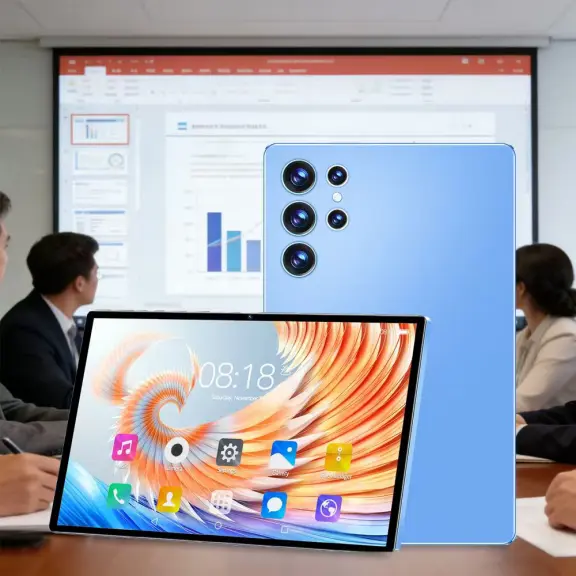
2.Core Technological Drivers: Dual Innovation in AI and Display
- AI Transition from "Gimmick" to "Necessity":
- On-Device AI Proliferation: 2026 will be a breakout year for generative AI (GenAI) tablets. GenAI-enabled tablets are projected to account for nearly 30% of total tablet shipments in China.
- Adaptive User Experience: Tablets will evolve beyond being "smart screens" to featuring "adaptive AI" capabilities, automatically adjusting modes and recommending applications based on users (e.g., children, professionals) and scenarios (e.g., studying, meetings, entertainment).
- Enhanced Productivity: AI will be deeply integrated into productivity suites, enabling professional-grade functions such as intelligent meeting notes, real-time translation, and AI-powered image editing—transforming tablets from "entertainment devices" into genuine "productivity tools."
- Display Technology Advancements:
- OLED Penetration Accelerates: Thanks to declining costs, OLED displays will rapidly expand into mid-to-high-end markets, offering superior contrast and color accuracy, becoming standard on flagship models.
- Screen Size Polarization: A "large-and-small" trend will emerge in screen sizes:
- Larger Screens: Devices with screens over 10 inches will increasingly resemble PCs, focusing on office work and content creation.
- Revival of Compact Sizes: Portable small-format tablets (e.g., 8–9 inches) will regain popularity, catering to one-handed use and mobile entertainment.
3.Competitive Landscape: The Strong Get Stronger, and Chinese Brands Break Through
- Dominance of Leading Brands: Apple and Samsung, leveraging robust supply chain control and brand premium, will be better equipped to absorb cost increases in 2026, enhancing their resilience and competitive edge.
- Chinese Manufacturers: Going Global and Intensifying Domestic Competition:
- Upgraded Global Expansion Strategy: Chinese brands (e.g., Lenovo, Huawei, Xiaomi) will shift from a simple "low-price, high-volume" approach to a "breakthrough via experience" strategy—creating differentiated user experiences through deep localization, app co-development, or partnerships to build competitive barriers in overseas markets.
- Focus on Education and Commercial Segments: The education (e.g., learning device features) and commercial (e.g., cloud office, industry-specific customization) sectors will become key growth areas for Chinese manufacturers.
4.Market Segmentation: From "Alternative" to "Integrated Terminal"
- Ecosystem Integration: Tablets will gradually move beyond their role as mere substitutes for smartphones or PCs, evolving into central control hubs and integrated terminals within the IoT ecosystem. Cross-device synergy (e.g., seamless collaboration with smartphones, PCs, and wearables) will become a core product differentiator.
- Growth in Commercial and Vertical Applications:
- Cloud Tablets: With the expansion of cloud computing services, multi-mode cloud tablets will sustain high growth in both consumer and SME markets, with an expected growth rate exceeding 25%.
- Industry-Specific Applications: Tablets will see deeper adoption in fields such as healthcare (medical record management), retail (mobile payments), and industrial sectors (equipment control).
5.Risks and Challenges
- Cost Pressures: As mentioned, rising prices of key components like memory will be the biggest uncertainty in 2026, potentially restricting shipments or forcing smaller brands to exit the market.
- Replacement Cycle: Due to the long lifespan of tablets and diminishing returns from hardware upgrades, consumer willingness to upgrade remains weak—unless disruptive use cases (e.g., deep integration with AR/VR) emerge.
Conclusion
The tablet market in 2026 will move beyond mere volume expansion and enter a new "value-driven" phase. AI capabilities and ecosystem integration will become critical determinants of brand survival, further consolidating market share among leading players. For consumers, purchasing a tablet will increasingly resemble buying a "portable workstation" or a "home entertainment center," rather than a simple video player.
Post time: Jan-01-2026